
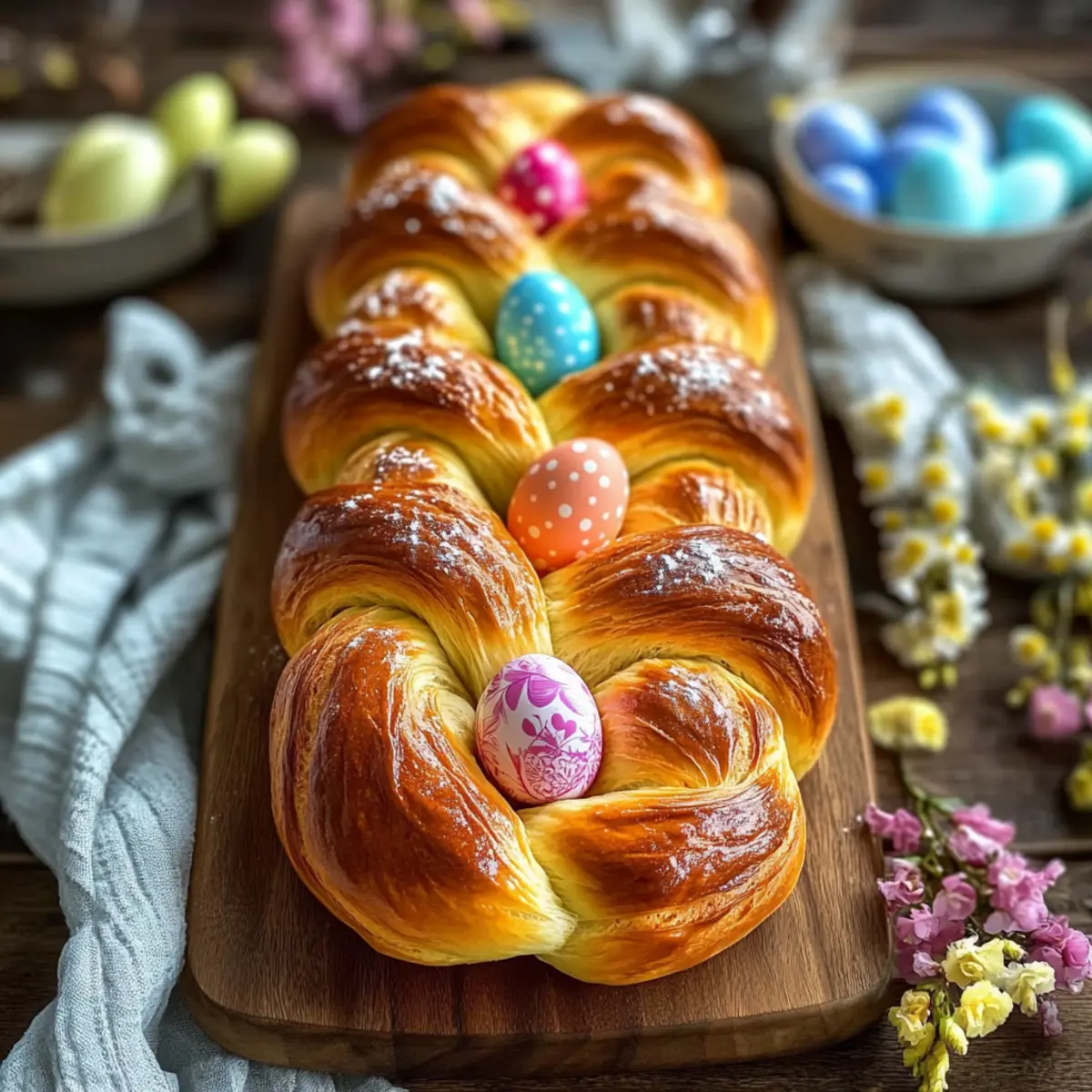
As the sweet scent of baking bread wafts through my kitchen, a wave of nostalgia sweeps over me, transporting me to festive gatherings with family. This Traditional Italian Easter Bread Recipe, with its soft, flavorful dough, is far more than just a delicious treat; it’s a true symbol of renewal and cultural heritage. Adorned with vibrant dyed eggs, it stands as a beautiful centerpiece that elevates any Easter celebration. Not only is this bread simple to whip up, but it also makes for a delightful snack or a festive breakfast option, sure to delight both family and friends. Ready to fill your home with warmth and tradition? Let’s dive into this cherished recipe!
Why is Easter Bread Special?
Cultural Significance: This recipe is steeped in Italian tradition, symbolizing renewal and new life, making it perfect for your Easter table. Vibrant Presentation: The colorful eggs not only beautify the bread but also represent the joys of spring. Comforting Taste: With its soft and subtly sweet flavor, this bread will have your loved ones coming back for second helpings. Easy to Make: Even beginners will find this Traditional Italian Easter Bread Recipe approachable, allowing you to impress without stress. Versatile Delight: Enjoy it warm with butter or jam, or pair it with savory dishes for a well-rounded feast. Embrace the season and create new traditions with this delicious recipe!
Traditional Italian Easter Bread Ingredients
For the Dough
• All-Purpose Flour – Provides structure and supports the dough; essential for texture.
• Sugar – Adds sweetness; can substitute with honey for a natural alternative.
• Eggs – Enrich the dough, contributing to its fluffy texture; consider using additional for a richer bread.
• Butter – Adds richness and flavor; can be replaced with margarine for a dairy-free option.
• Warm Milk – Activates yeast and adds moisture; use almond milk for a dairy-free alternative.
• Yeast – Leavens the bread; ensure it is fresh for best results.
• Citrus Zest (e.g., lemon or orange) – Enhances flavor profile with a refreshing note; can swap for vanilla extract for a different flavor.
For Decoration
• Dyed Hard-Boiled Eggs – Decorative element symbolizing spring; ensure they’re prepped (dyed and boiled) before use.
This Traditional Italian Easter Bread Recipe is perfect for bringing warmth and joy to your festive celebrations!
Step‑by‑Step Instructions for Traditional Italian Easter Bread Recipe
Step 1: Prepare the Dough
In a small bowl, combine 1 cup of warm milk with 2 tablespoons of yeast, letting it sit for about 5-10 minutes until frothy. In a larger mixing bowl, whisk together 4 cups of all-purpose flour, ½ cup of sugar, 3 eggs, and ½ cup of softened butter. Gradually pour the activated yeast mixture into the dry ingredients, stirring until a soft dough begins to form.
Step 2: Knead the Dough
Turn the dough onto a lightly floured surface and knead it for about 8–10 minutes until it becomes smooth and elastic. To check for proper gluten development, perform the windowpane test: stretch a piece of dough between your fingers; it should form a thin, translucent membrane without tearing. Once kneaded, shape the dough into a ball.
Step 3: First Rise
Place the dough ball into a greased bowl, turning it to coat all sides with oil. Cover the bowl with a clean kitchen towel or plastic wrap, and set it in a warm place. Allow the dough to rise until it has doubled in size, which should take about 1.5 to 2 hours. The volume and fluffy texture will indicate it’s ready for the next step.
Step 4: Shape and Braid
Once risen, gently punch down the dough to release air bubbles, then turn it out onto a floured surface. Divide the dough into three equal pieces, rolling each piece into a rope approximately 16-18 inches long. Braid the ropes together tightly, shaping it into a circle or placing it in a greased baking pan. Carefully press the dyed hard-boiled eggs into the braid, ensuring they’re securely nestled.
Step 5: Second Rise
Cover the braided dough with a towel and allow it to rise again in a warm area for 30-45 minutes, or until it’s visibly puffed up. This stage helps the bread develop a light, airy texture. When it doubles in size, it’s ready to be baked, with the vibrant egg colors adding a lovely touch.
Step 6: Bake
Preheat your oven to 350°F (175°C). Before placing the bread in the oven, brush the top with an egg wash made from a beaten egg mixed with a splash of water. Bake in the preheated oven for 25-30 minutes, or until the crust is golden brown and the internal temperature reaches around 190°F (88°C). The warm, sweet aroma will fill your kitchen.
Step 7: Cool
Once baked, remove the Traditional Italian Easter Bread from the oven and let it cool in the pan for about 10 minutes. Carefully transfer the bread to a wire rack to cool completely before slicing. The beautiful braided look and colorful eggs will make it a stunning centerpiece for your Easter celebration.

Tips for the Best Traditional Italian Easter Bread
-
Measure Accurately: Weighing your flour ensures the perfect dough texture. Too much flour can lead to a dry bread, so measure carefully!
-
Activate Yeast Correctly: Make sure your milk is warm, not hot, to keep the yeast alive. A cozy environment is key to a fluffy dough.
-
Kneading Technique: Don’t rush the kneading! Kneading helps develop gluten, providing the necessary structure. Aim for 8-10 minutes for optimal results.
-
Rising Timings: Patience is your friend during the rising stages. If it’s chilly, find a warm spot to promote proper dough expansion and avoid premature baking.
-
Styling the Bread: Press dyed eggs into the braid gently; they should fit snugly but not distort the shape. This adds a festive flair and visual appeal.
-
Checking Doneness: Ensure your Traditional Italian Easter Bread is golden and sounds hollow when tapped on the bottom. This guarantees it’s baked to perfection!
What to Serve with Traditional Italian Easter Bread?
Create a delightful dining experience that enhances the flavors of your festive meal.
- Creamy Mashed Potatoes: Their buttery richness contrasts beautifully with the sweetness of the bread, creating a comfort food classic.
- Zesty Lemon Asparagus: This fresh, bright side adds a pop of color and complements the citrus notes in the bread.
- Italian Antipasto Platter: A savory balance of cured meats, olives, and cheeses elevates the feast, inviting guests to nibble.
- Garden Salad with Vinaigrette: Crisp greens dressed in a tangy vinaigrette can cleanse the palate after enjoying the sweet bread.
- Hot Cross Buns: Serve as a lovely sweet touch to your table, creating a charming connection between Easter traditions.
- Red Wine Sangria: This fruity drink pairs exquisitely with the Easter Bread, offering a refreshing contrast to its sweetness and enhancing the festive mood.
- Homemade Strawberry Jam: Slather on slices of the bread for a delicious and fruity twist that harmonizes with its buttery richness.
- Chocolate Easter Eggs: For a fun dessert, serve luxurious chocolate eggs that resonate with the theme of renewal and celebration!
- Honey Glazed Carrots: Their natural sweetness mirrors that of the bread, while their tender texture adds an inviting contrast.
- Coconut Panna Cotta: A luscious dessert that’s light and creamy; it’s the perfect end to your celebratory meal while continuing the rich, sweet theme.
Make Ahead Options
This Traditional Italian Easter Bread Recipe is fantastic for busy cooks looking to save time during the festive season! You can prepare the dough up to 24 hours in advance. After kneading, cover it tightly with plastic wrap and refrigerate to maintain its quality. When you’re ready to bake, let it sit at room temperature for about 30 minutes before shaping and braiding. The dyed eggs can be boiled and dyed in advance, allowing you to simply press them into the braid before the second rise. With these make-ahead options, you’ll have more time to enjoy the celebration while still serving fresh, homemade bread that’s just as delicious!
Traditional Italian Easter Bread Variations
Feel free to mix it up and add your personal touch to this delightful bread recipe!
-
Dairy-Free: Replace butter with margarine and warm milk with almond milk for a lighter option.
-
Honey Sweetened: Swap sugar for honey to give the dough a unique, natural sweetness that complements the bread’s flavor beautifully.
-
Citrus Boost: Experiment with different citrus zests like lime or grapefruit for a refreshing twist that brightens the bread.
-
Nutty Delight: Add chopped nuts, such as almonds or hazelnuts, into the dough for added texture and flavor complexity.
-
Fruity Touch: Incorporate dried fruits such as raisins, cranberries, or chopped apricots for a sweet surprise in every slice.
-
Spiced Version: Sprinkle in some ground cinnamon or nutmeg for a warm, aromatic flavor that evokes cozy holiday memories.
-
Savory Spin: Add a pinch of sea salt and some grated cheese to the dough for a rich, savory take that pairs wonderfully with brunch.
-
Charming Colors: Use food-safe dyes to create multicolored eggs for decoration, bringing a festive flair that appeals to both children and adults.
This Traditional Italian Easter Bread can be adapted in so many delightful ways, so don’t hesitate to get creative! For more delicious ideas, check out my recipes for Parmesan Bread Pudding or Italian Meatloaf Cheesy.
How to Store and Freeze Traditional Italian Easter Bread
Room Temperature: Keep your Traditional Italian Easter Bread in an airtight container at room temperature for up to 3 days to maintain freshness.
Fridge: If you live in a warmer climate, you may store it in the fridge for up to 5 days. Wrap it tightly to prevent drying out.
Freezer: For longer storage, freeze slices in a single layer, then transfer to a freezer-safe bag. Enjoy within 2–3 months for best quality.
Reheating: To enjoy, simply thaw slices at room temperature or warm them in the oven at 350°F (175°C) for about 10 minutes for that fresh-out-of-the-oven taste.

Traditional Italian Easter Bread Recipe FAQs
What is the best way to select eggs for decoration?
Absolutely! When choosing eggs for decoration, look for fresh, unblemished eggs with smooth shells. Avoid any with dark spots or cracks, as these may spoil. If you’re dyeing the eggs, white eggs take color better, providing a vibrant pop for your Easter Bread!
How should I store leftover Traditional Italian Easter Bread?
Store your Traditional Italian Easter Bread in an airtight container at room temperature for up to 3 days. If you live in a warmer climate, refrigeration will keep it fresh for about 5 days, just ensure it’s wrapped securely to avoid drying out.
Can I freeze Traditional Italian Easter Bread?
Very much so! To freeze, slice the bread after it has completely cooled. Place the slices in a single layer on a baking sheet and freeze them until solid. Then transfer to a freezer-safe bag. It can be stored for up to 2 to 3 months. When you’re ready to enjoy, simply thaw at room temperature or warm in the oven at 350°F (175°C) for about 10 minutes.
What if my dough isn’t rising as expected?
Don’t worry! If your dough isn’t rising, it might be due to expired yeast or a cold environment. Ensure your yeast is fresh by checking the expiration date. For effective proofing, place the bowl in a warm, draft-free area (like an oven with just the light on) until it doubles in size. If it’s very cold, you can even preheat a cup of water in the microwave for 1-2 minutes, remove the water, and then place the dough in the warm microwave to rise.
Can I make any dietary substitutions in this recipe?
Certainly! You can use almond milk in place of regular milk for a dairy-free version, and margarine can substitute for butter. For a more natural sweetness, you might replace granulated sugar with honey. If allergies are a concern, always double-check ingredients, especially with store-bought items like butter or margarine.
Are dyed eggs safe to eat after baking?
Overall, yes! The dyed hard-boiled eggs used in the Traditional Italian Easter Bread add a lovely decorative touch, and as long as they’re handled properly before use, they remain safe to eat. Be careful not to overcook them, as that can lead to a green ring around the yolk inside. Enjoy them as snacks or additions to salads after your festivities!

Delicious Traditional Italian Easter Bread Recipe to Embrace Spring
Ingredients
Equipment
Method
- In a small bowl, combine 1 cup of warm milk with 2 tablespoons of yeast, letting it sit for about 5-10 minutes until frothy.
- In a larger mixing bowl, whisk together 4 cups of all-purpose flour, ½ cup of sugar, 3 eggs, and ½ cup of softened butter.
- Gradually pour the activated yeast mixture into the dry ingredients, stirring until a soft dough begins to form.
- Turn the dough onto a lightly floured surface and knead it for about 8–10 minutes until it becomes smooth and elastic.
- Place the dough ball into a greased bowl, turning it to coat all sides with oil. Cover the bowl and set it in a warm place.
- Allow the dough to rise until it has doubled in size, which should take about 1.5 to 2 hours.
- Once risen, gently punch down the dough to release air bubbles, then turn it out onto a floured surface.
- Divide the dough into three equal pieces, rolling each piece into a rope approximately 16-18 inches long.
- Braid the ropes together tightly and shape it into a circle or place it in a greased baking pan.
- Carefully press the dyed hard-boiled eggs into the braid, ensuring they're securely nestled.
- Cover the braided dough with a towel and allow it to rise again in a warm area for 30-45 minutes.
- Preheat your oven to 350°F (175°C). Brush the top of the bread with an egg wash made from a beaten egg mixed with a splash of water.
- Bake in the preheated oven for 25-30 minutes, or until the crust is golden brown and the internal temperature reaches around 190°F (88°C).
- Once baked, remove from the oven and let it cool in the pan for about 10 minutes before transferring to a wire rack.
Leave a Reply