
The smell wafting through my kitchen as the steaks hit the hot skillet is enough to transport me straight to a lively Japanese grill. This quick and easy Hibachi Steak recipe captures that dynamic atmosphere in just 25 minutes! Featuring juicy, tender steak alongside vibrant vegetables, each bite is drizzled with a savory soy butter sauce that’s both mouthwatering and satisfying. Not only is this dish a restaurant-quality meal you can whip up at home, but it’s also packed with high-protein goodness and is gluten-free if you use tamari instead of standard soy sauce. Whether you’re hosting friends or treating yourself to a cozy dinner, you’ll be delighted by how simple and delicious Hibachi Steak can be. Are you ready to bring the hibachi experience to your own table?
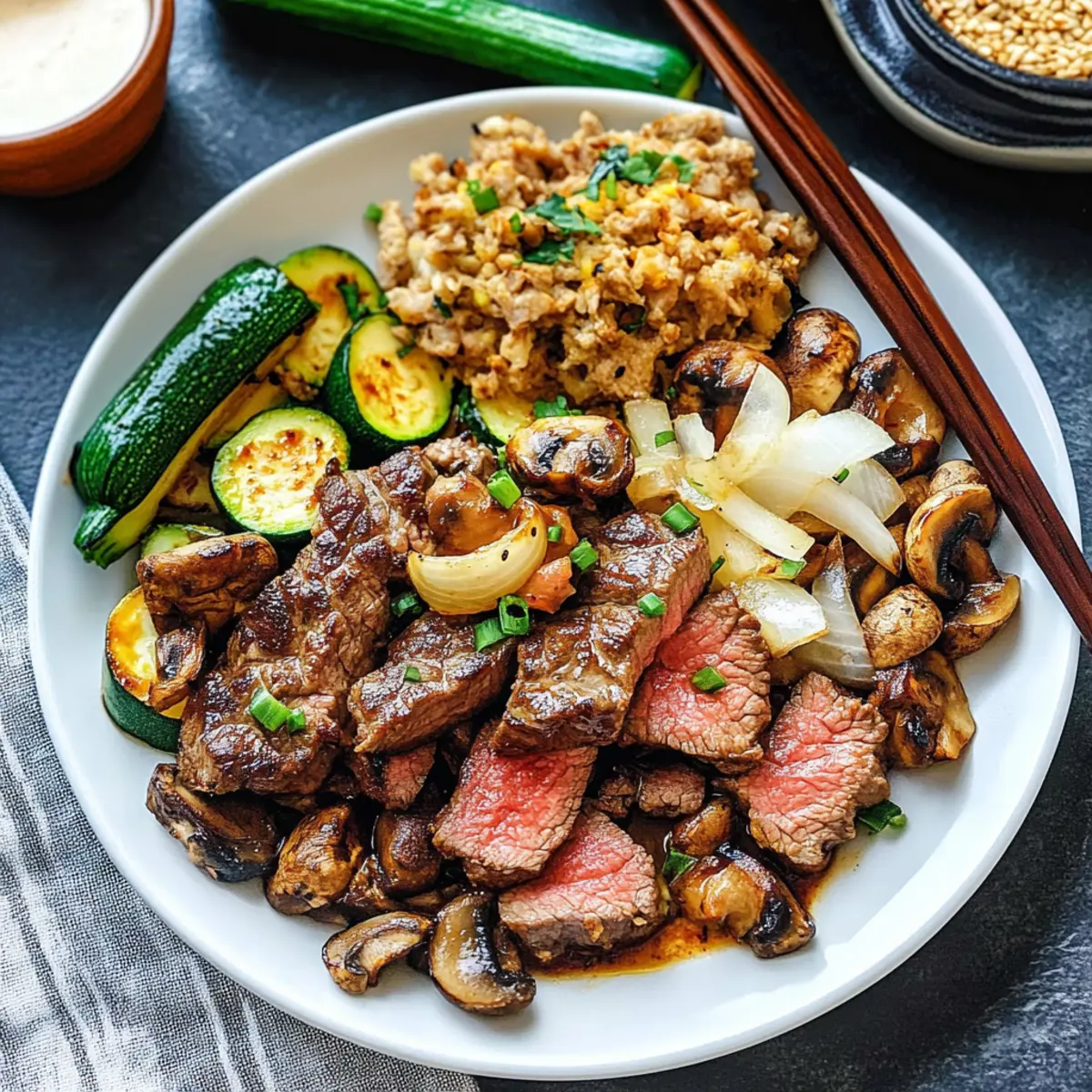
Why is Hibachi Steak so special?
Restaurant-quality cooking at home means you can enjoy the flavors of your favorite grill without leaving your kitchen. Quick prep in just 25 minutes makes this dish perfect for busy weeknights. High-protein meal, ideal for those looking to fuel their bodies with wholesome ingredients. Versatile variations let you swap in seasonal veggies or different cuts of steak, keeping things exciting. And if you’re a fan of vibrant flavors, the savory soy butter sauce takes it all to the next level, reminiscent of a Japanese steakhouse! For a complete meal, try pairing your steak with some Hibachi Fried Rice or your favorite side dish.
Hibachi Steak Ingredients
• Prepare to embark on a flavor journey with these essential ingredients!
For the Sauce
- Soy Sauce – Adds umami and saltiness; substitute with tamari for a gluten-free Hibachi Steak.
- Butter – Provides richness and depth to the sauce; use plant-based butter for a dairy-free twist.
- Garlic (minced) – Enhances flavor with a robust aroma; opt for fresh garlic for the best taste.
For the Steak and Seasoning
- Steak (strip/bite-sized pieces) – Main protein source; sirloin or rib-eye are perfect choices for tenderness.
- Salt – Enhances overall flavor; adjust to taste depending on your preference.
- Black Pepper (freshly ground) – Adds mild heat; use optional according to your spice tolerance.
For Cooking and Flavor
- Avocado Oil – Ideal for high-heat cooking; can also substitute with grapeseed or vegetable oil.
- Sesame Oil – Adds a delightful nutty flavor; essential for achieving that authentic Hibachi taste.
For the Vegetables
- Zucchini (sliced) – Provides a fresh vegetable element; feel free to swap in other seasonal veggies.
- Onion (halved and sliced) – Brings sweetness and extra flavor; enhance your dish with shallots if desired.
- Mushrooms (sliced) – Contributes earthiness; substitute with bell peppers or asparagus for a change.
For Finishing Touches
- Mirin – A sweet rice wine that balances flavors; if unavailable, white wine mixed with sugar works well as a substitute.
Step‑by‑Step Instructions for Hibachi Steak
Step 1: Prepare the Soy Butter Sauce
In a bowl, combine soy sauce, melted butter, and minced garlic. Mix well to ensure the garlic is evenly distributed throughout the sauce. Set this delectable mixture aside as it will enhance the flavor of your Hibachi Steak once the meat is cooked.
Step 2: Season the Steak
Cut your steak into bite-sized pieces and place them in a mixing bowl. Generously season the steak bites with salt and freshly ground black pepper, mixing them well to ensure all sides are coated. This seasoning will bring out the steak’s natural flavors during cooking.
Step 3: Heat the Cooking Surface
Preheat your cast iron skillet or Blackstone griddle over medium-high heat. Drizzle a generous amount of avocado oil onto the hot surface, allowing it to heat until shimmering. This ensures a good sear, making your Hibachi Steak beautifully browned and tender.
Step 4: Cook the Steak
Add the seasoned steak bites to the hot skillet, spreading them out for even cooking. Sear the steak for approximately 5 minutes, stirring occasionally until all sides are browned and the steak is cooked to your desired level of doneness.
Step 5: Add the Soy Butter Sauce
Once your Hibachi Steak bites are browned, pour half of the prepared soy butter sauce over the meat. Continue cooking for an additional minute, allowing the sauce to coat the steak and infuse it with rich flavors—the delicious aroma will waft through your kitchen!
Step 6: Transfer the Steak
Carefully transfer the cooked steak to a serving bowl, using a slotted spoon to leave excess liquid behind. This will keep your Hibachi Steak tender and juicy. Set it aside while you prepare the vegetables in the same pan for a harmonious flavor blend.
Step 7: Sauté the Vegetables
In the same pan, add the sliced zucchini, onion, and mushrooms. Season them lightly with salt and pepper to boost their flavors. Spread the vegetables in an even layer and let them cook for around 5 minutes, stirring halfway through until they become tender and lightly caramelized.
Step 8: Finish with Mirin and Sauce
After the vegetables have cooked, drizzle mirin along with the remaining soy butter sauce over them. Toss everything gently and let it cook for an additional 2 minutes, allowing the flavors to meld. The combination will create a delightful side to accompany your Hibachi Steak.
Step 9: Serve your Hibachi Steak
Once everything is cooked and bursting with flavor, serve your Hibachi Steak alongside the vibrant sautéed vegetables. For a complete meal, consider pairing it with delicious hibachi fried rice or your favorite side dish, and get ready to savor a restaurant-quality experience at home!
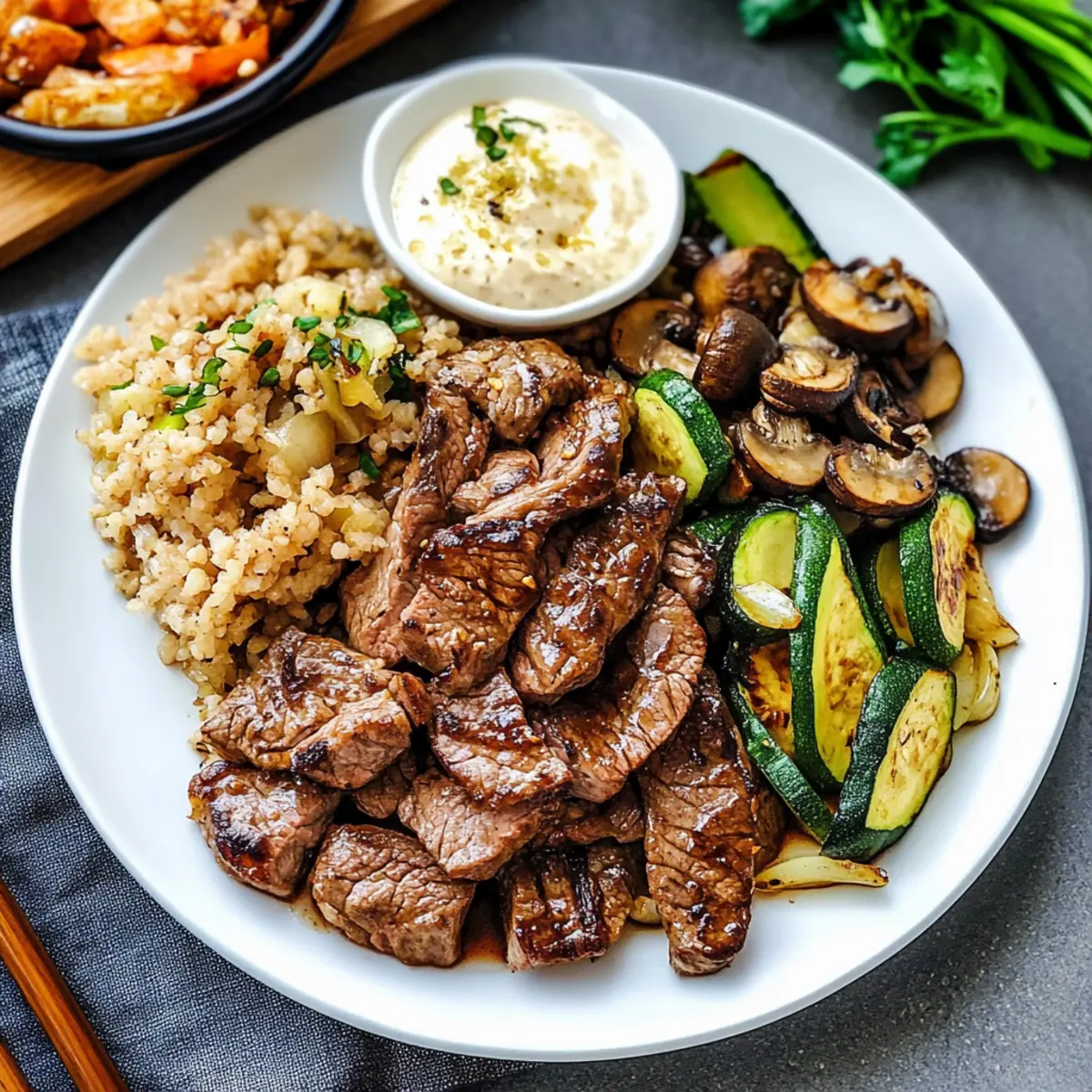
Hibachi Steak Variations & Substitutions
Feel free to tailor your Hibachi Steak to your tastes and pantry staples, making it uniquely yours!
- Dairy-Free: Swap regular butter with plant-based butter for a creamy texture without the dairy.
- Gluten-Free: Use tamari instead of soy sauce for a gluten-free option that retains all the rich flavor.
- Vegetable Swap: Experiment with seasonal veggies like bell peppers or snap peas to bring fresh flavors and colors into your dish.
- Different Steak Cuts: Try flank or tenderloin steak for a unique flavor experience while keeping the dish wholesome and hearty.
- Noodle Love: Serve your Hibachi Steak with soba noodles or udon and a splash of sesame oil for a delightful change of pace.
- Spice It Up: Add a pinch of red pepper flakes or a drizzle of sriracha for an extra kick of heat that will awaken your taste buds.
- Add Sweetness: A touch of honey or maple syrup in the soy butter sauce can enhance flavors and create a delightful sweetness that balances savory notes beautifully.
- Fried Rice Fiesta: Mix up your accompanying side by pairing your steak with a vibrant vegetable fried rice, like the delicious one found in our Hibachi Fried Rice recipe.
Whatever variation you choose, the joy of cooking lies in experimentation. Happy creating!
What to Serve with 25-Minute Hibachi Steak
Elevate your Hibachi Steak experience by pairing it with delightful sides and accompaniments that complement its flavors and textures.
-
Hibachi Fried Rice: This classic companion offers a savory base with a delicious blend of vegetables, perfectly soaking up the rich soy butter sauce.
-
Steamed Edamame: Lightly salted and vibrant green, these tender beans provide a fresh, protein-packed side that brightens your meal.
-
Crisp Cucumber Salad: Cool and refreshing, this salad brings a crunchy contrast to the rich flavors of the steak. Drizzle with a light sesame dressing for added zing.
-
Grilled Corn on the Cob: Sweet and smoky, grilled corn adds a touch of summer to your experience, enticing your taste buds with every bite.
-
Miso Soup: Warm and soothing, this flavorful broth provides a comforting contrast to the hearty steak, enhancing the traditional Japanese dining experience.
-
Sake or Japanese Beer: Sip on a refreshing sake or an authentic Japanese beer to balance the flavors of your meal, creating a truly immersive experience reminiscent of dining at a hibachi grill.
-
Chocolate Mousse: For dessert, this light and airy treat is the perfect sweet finish to your hibachi feast, balancing richness with a touch of indulgence.
How to Store and Freeze Hibachi Steak
Fridge: Store leftover Hibachi Steak in an airtight container for up to 3 days. Reheat gently in a skillet over low heat to maintain tenderness.
Freezer: If you want to enjoy Hibachi Steak later, freeze the cooled portions in an airtight container for up to 2 months. Thaw in the fridge overnight before reheating.
Reheating: For the best flavor and texture, reheat in a skillet with a splash of water or soy sauce to help revive the juicy quality.
Meal Prep: This dish is perfect for meal prep! Cook in batches and store in individual portions for easy weekday meals.
Expert Tips for Hibachi Steak
High-Quality Steak: Use the best quality steak you can find to elevate the flavors of your Hibachi Steak. A tender cut, like rib-eye or sirloin, makes a difference.
Preheat Properly: Always ensure your cooking surface is hot enough before adding the steak. This step is crucial for achieving that perfect sear and tender texture.
Keep it Moving: Stir your steak bites frequently while cooking. This prevents overcooking and ensures even browning, giving you juicy bites of Hibachi Steak.
Customize Veggies: Don’t shy away from experimenting with vegetables! Use whatever seasonal produce you have on hand to add color and nutrition to your dish.
Don’t Skip the Sauce: The soy butter sauce is key to flavor. Be generous when pouring it over the steak, as it ties all the delicious flavors together beautifully.
Watch Cooking Times: Pay attention to cooking times for both meat and veggies. Overcooked vegetables can lose their vibrant crunch, while overcooked steak can become tough. Aim for perfection!
Make Ahead Options
These Hibachi Steak bites are perfect for meal prep to save you time on busy weeknights! You can season your steak pieces up to 24 hours in advance by coating them with salt and pepper, storing them in an airtight container in the refrigerator. Additionally, the soy butter sauce can be prepared and refrigerated for 3 days, allowing the flavors to meld beautifully. When you’re ready to cook, simply heat avocado oil in a skillet, sear the marinated steak for about 5 minutes, then add your refrigerated soy butter sauce and cook for an extra minute. This way, your Hibachi Steak will be just as delicious as if you had freshly made it!
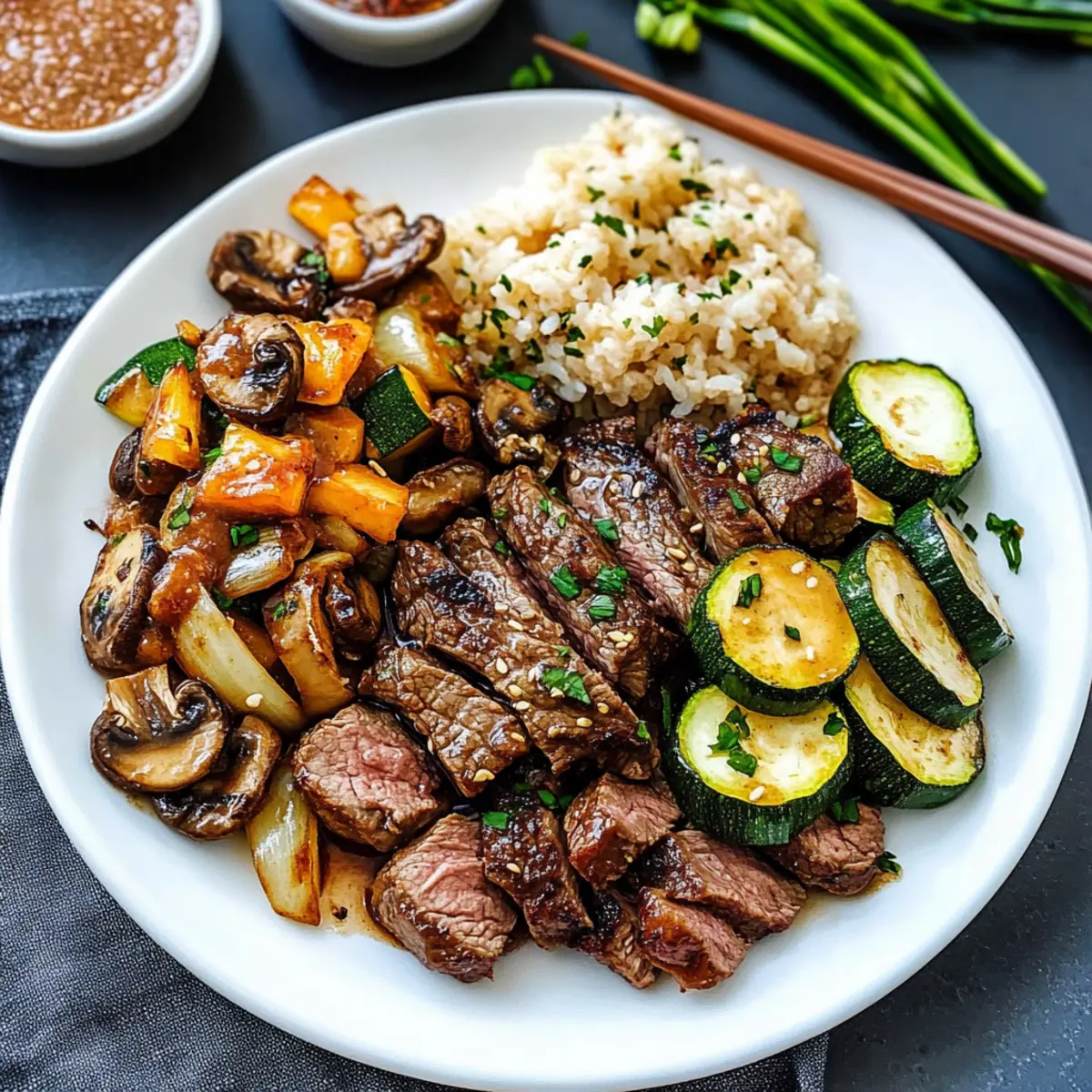
Hibachi Steak Recipe FAQs
What kind of steak should I use for Hibachi Steak?
Use high-quality steaks like rib-eye or sirloin for optimal tenderness and flavor. These cuts sear beautifully and offer a rich taste that enhances the dish. If you’re exploring options, flank steak can also be a delicious alternative, offering a different texture.
How do I know when the ingredients, especially vegetables, are ripe?
For optimal flavor, choose vegetables that are vibrant and firm. Zucchini should be smooth and shiny without dark spots, while mushrooms should be fresh and free of blemishes. Onions should have a strong aroma; avoid any with soft spots or excessive sprouting.
What is the best way to store leftover Hibachi Steak?
Store your leftover Hibachi Steak in an airtight container in the refrigerator for up to 3 days. Make sure it cools down to room temperature before sealing to prevent moisture buildup, which can affect the texture. Gently reheat it in a skillet over low heat to maintain juiciness.
Can I freeze Hibachi Steak?
Absolutely! To freeze Hibachi Steak, allow it to cool completely, then portion the steak into airtight containers. It can be frozen for up to 2 months. When you’re ready to enjoy it, thaw it overnight in the fridge and reheat it gently on the stove with a splash of water or soy sauce to restore moisture.
What if I have dietary restrictions or allergies?
If you have gluten sensitivities, use tamari instead of soy sauce for a gluten-free option. Additionally, if you’re dairy-free, substitute butter with plant-based alternatives. Always check for allergens in your vegetables and seasonings; for instance, some individuals may be allergic to sesame oil or specific types of mushrooms.
Any tips for troubleshooting Hibachi Steak if it comes out tough?
If your Hibachi Steak ends up tough, it may be due to overcooking or using a lean cut of steak. Always keep an eye on cooking times, and consider marinating the steak for at least 30 minutes before cooking to help tenderize it. Additionally, cooking at a high enough temperature is crucial for a good sear without drying it out.
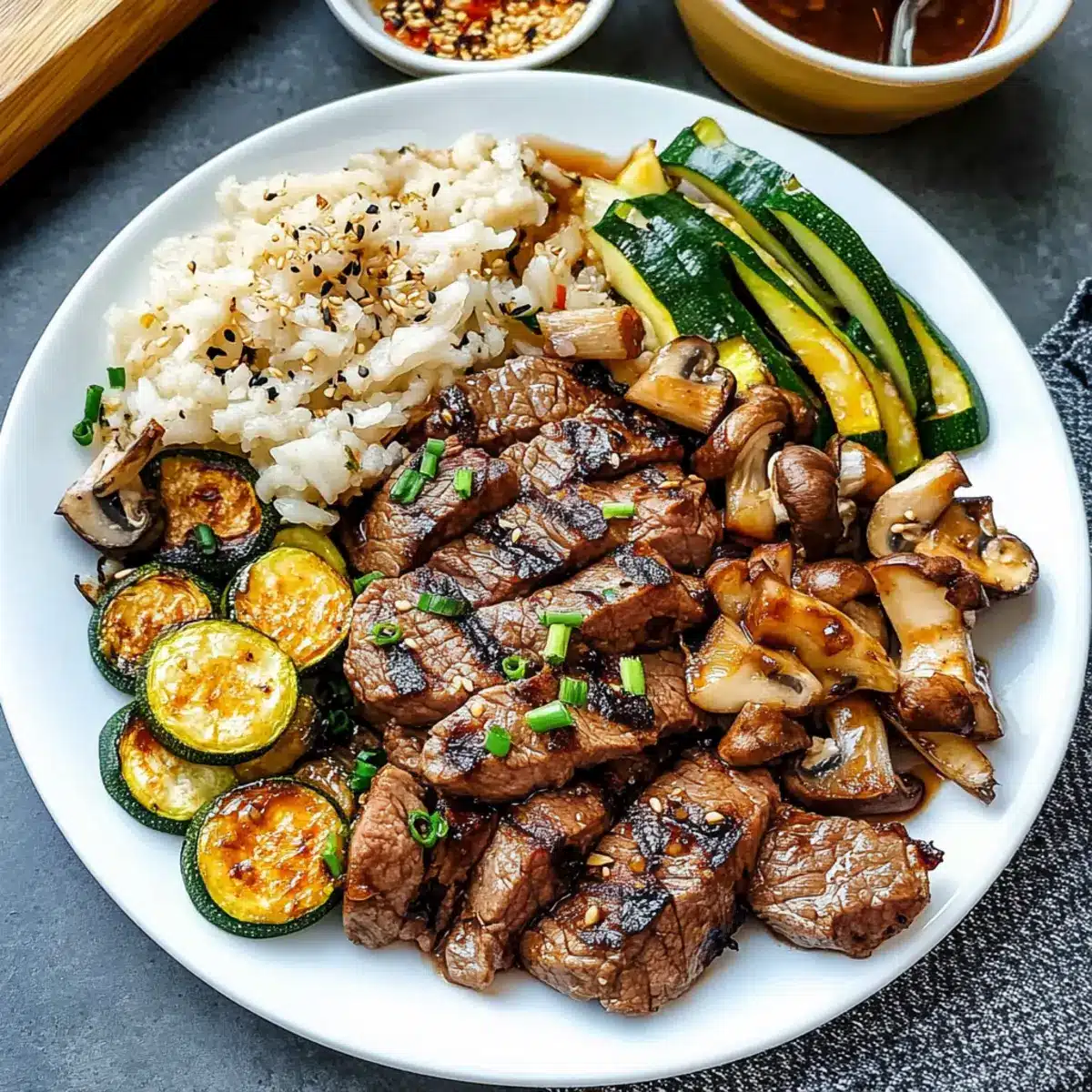
Savor Quick Hibachi Steak with Vibrant Veggies at Home
Ingredients
Equipment
Method
- In a bowl, combine soy sauce, melted butter, and minced garlic. Mix well and set aside.
- Cut the steak into bite-sized pieces. Season with salt and freshly ground black pepper, mixing well.
- Preheat a cast iron skillet over medium-high heat. Drizzle with avocado oil until shimmering.
- Add seasoned steak bites, searing for approximately 5 minutes until cooked to desired doneness.
- Pour half the soy butter sauce over the meat and cook for an additional minute.
- Transfer cooked steak to a serving bowl, leaving excess liquid behind.
- In the same pan, add zucchini, onion, and mushrooms. Season lightly and cook for around 5 minutes.
- Drizzle mirin and remaining soy butter sauce over the vegetables and cook for an additional 2 minutes.
- Serve the Hibachi Steak alongside the sautéed vegetables.
Leave a Reply