
Walking through the farmer’s market on a sunny spring morning, I can’t help but smile at the colorful array of fresh vegetables vying for my attention. With each visit, the vibrant zucchini, crisp asparagus, and juicy tomatoes whisper promises of delightful meals to come. Today, I’m excited to share my recipe for Creamy Spring Pasta Primavera, a perfect way to celebrate the season’s bounty. This vegetarian dish is not only a feast for the eyes but also a quick and satisfying option for busy weeknights or leisurely weekends. The creamy sauce brings it all together, creating a light yet indulgent flavor that will leave everyone at the table longing for seconds. Are you ready to brighten up your dinner routine? Let’s dive into the joy of spring cooking!
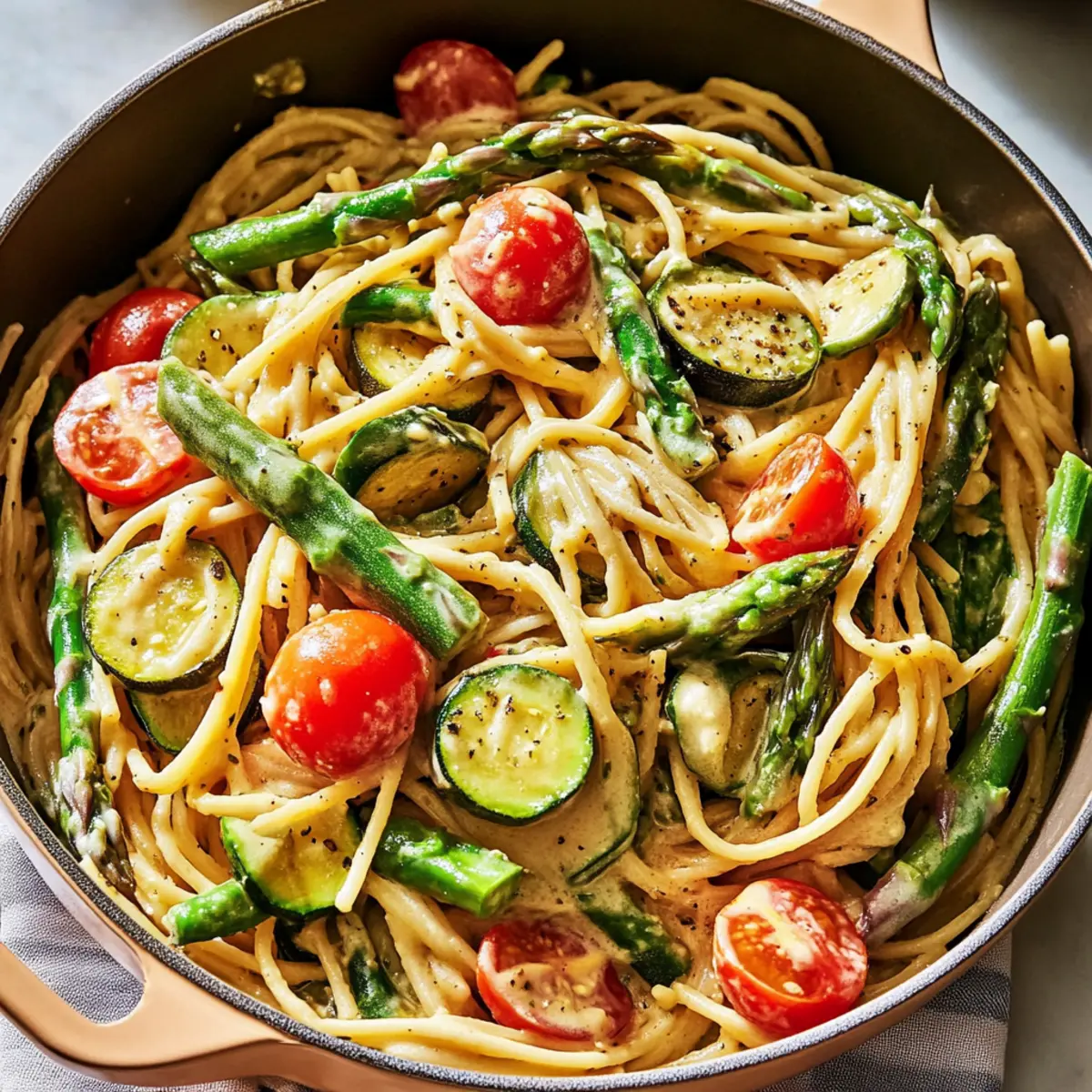
Why is Pasta Primavera a Must-Try?
Vibrant Colors: Pasta Primavera showcases a rainbow of seasonal vegetables, transforming your plate into a beautiful canvas of color.
Quick & Easy: Perfect for busy weeknights, this dish comes together in under 30 minutes, making it an ideal choice for flavorful dinners with minimal effort.
Creamy Indulgence: The rich, creamy sauce envelops the noodles and veggies, offering a delightful balance without compromising on lightness.
Customizable Delight: Feel free to swap in your favorite vegetables, making this dish as unique as you are. Try pairing it with a crisp side salad or some delicious Grilled Chicken Pasta for a complete meal!
Family-Friendly: This recipe is sure to satisfy vegetarians and meat-lovers alike, making it a fantastic option for family dinners or entertaining guests.
Pasta Primavera Ingredients
Get ready to whip up a vibrant and creamy dish celebrating the freshness of spring!
For the Pasta
• Kosher Salt – Enhances flavors; reduce if using iodized or sea salt.
• Spaghetti – This long noodle captures the sauce and veggies beautifully; any long pasta can be substituted.
For the Vegetables
• Extra-Virgin Olive Oil – Adds richness and is essential for sautéing vegetables; use more for extra flavor.
• Zucchini – Provides moisture and texture; slice into 1/2″ half-moons; no direct substitutes suggested.
• Asparagus – Adds crunch; ideally pencil-thin and trimmed; substitute with green beans if unavailable.
• Red Onion – Brings sweetness and color; slice into 1/4″ half-moons; can be swapped with yellow onion.
• Leeks – Contributes a mild onion flavor; cut into 1/2″ half-moons; substitute with shallots if needed.
• Red Bell Pepper – Offers sweetness and crunch; remove seeds and chop; no direct substitutes recommended.
• Garlic – Enhances aroma and depth; finely chop 5 cloves; fresh garlic is preferable for flavor.
• Grape Tomatoes – Provides sweetness and acidity; whole or halved; substitute with cherry tomatoes if preferred.
• Frozen Peas – Offers sweetness; thawed before use; fresh peas can be used if available.
For the Sauce
• Heavy Cream – Creates a creamy texture; 3/4 cup used; can be replaced with half-and-half for a lighter option.
• Parmesan Cheese – Adds umami; finely grated; optional nutritional yeast can be used for a vegan option.
• Lemon Zest & Juice – Adds acidity for brightness; optional but recommended for a true Pasta Primavera flavor; substitute lime if preferred.
• Freshly Ground Black Pepper – Enhances overall flavor; adjust to taste.
Get your ingredients ready, and let’s bring the joy of spring cooking to your table with this delightful Pasta Primavera!
Step‑by‑Step Instructions for Pasta Primavera
Step 1: Cook the Pasta
Begin by bringing a large pot of water to a rolling boil and season it generously with kosher salt. Add the spaghetti and cook until it is just one minute shy of al dente, approximately 7-9 minutes. Before draining, reserve about 1 cup of pasta water. Drain the spaghetti and set it aside, ensuring you finish this step while the pasta is still warm.
Step 2: Sauté the Vegetables
In a large skillet, heat 2 tablespoons of extra-virgin olive oil over medium heat. Once the oil shimmers, add the zucchini slices and sauté for about 3-4 minutes until they are tender and starting to brown. Next, add the asparagus and cook for an additional 2-3 minutes until it turns bright green and remains slightly crisp. Remove both vegetables from the skillet and set aside.
Step 3: Cook the Aromatics
In the same skillet, add another tablespoon of olive oil if needed and lower the heat to medium-low. Toss in the diced red onion, leeks, and finely chopped garlic. Stir occasionally, seasoning with a pinch of salt, and cook until the onions are translucent, about 4-5 minutes. This step is crucial for developing the aromatic base for your Pasta Primavera.
Step 4: Combine Ingredients
Add the halved grape tomatoes, heavy cream, thawed peas, and a splash of the reserved pasta water to the skillet. Stir vigorously for about 2 minutes until everything is well combined and the sauce thickens slightly. Bring back the sautéed zucchini and asparagus, folding them into the creamy mixture until evenly coated.
Step 5: Finishing Touches
Sprinkle finely grated Parmesan cheese over the hot pasta mixture and toss to combine, allowing the cheese to melt into the sauce beautifully. Adjust the seasoning with freshly ground black pepper, lemon juice, and lemon zest to taste, making your Pasta Primavera shine with fresh spring flavors. Serve immediately for the best texture and flavor!
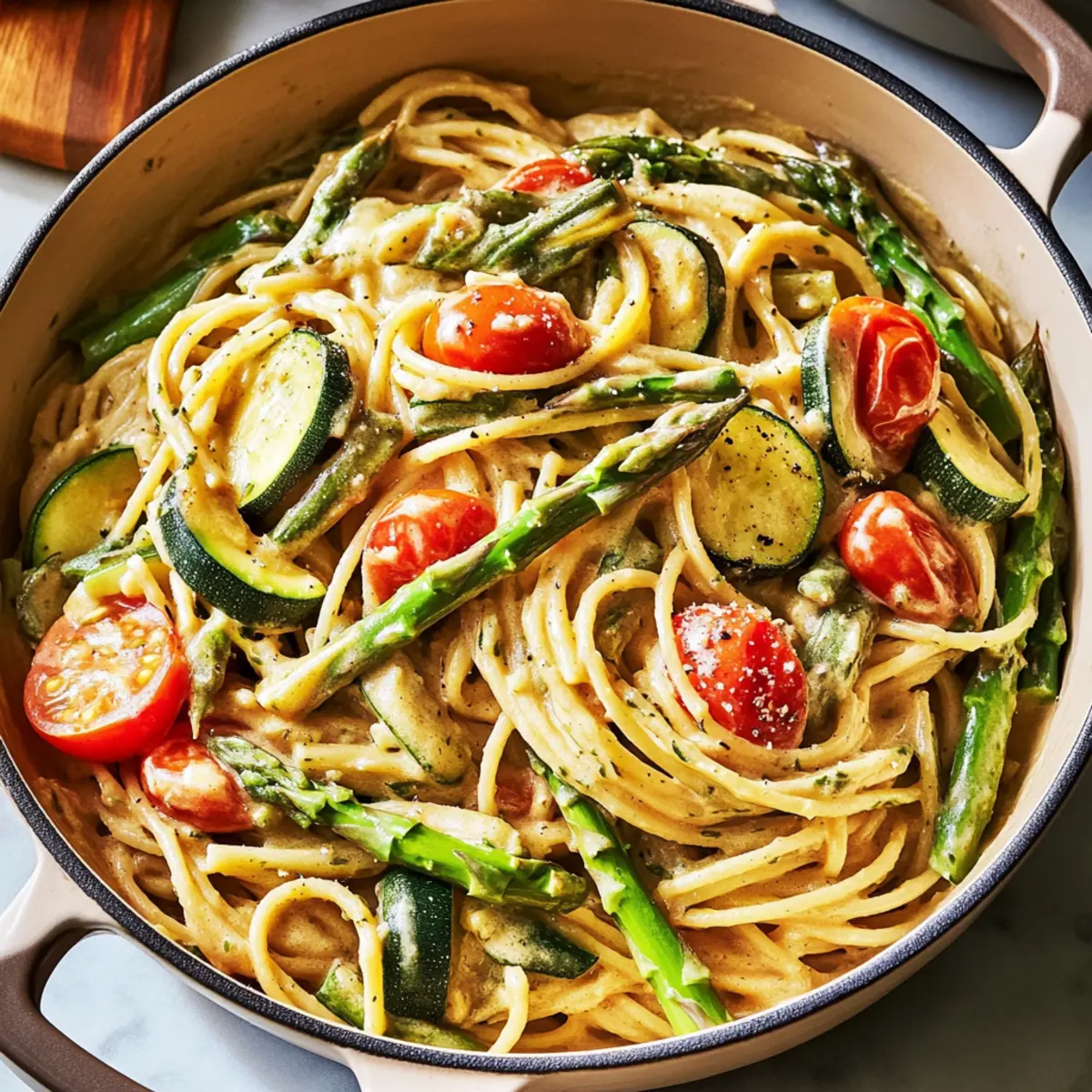
How to Store and Freeze Pasta Primavera
Fridge: Store leftovers in an airtight container for up to 3 days. Reheat gently on the stovetop with a splash of cream to restore moisture and creaminess.
Freezer: For longer storage, portion the cooled Pasta Primavera into freezer-safe containers. Freeze for up to 2 months. Thaw in the fridge before reheating.
Reheating: When ready to enjoy again, reheat on the stovetop over low heat, adding a little extra cream or pasta water to regain the saucy consistency of your creamy Pasta Primavera.
Airtight Protection: Ensure the container is airtight to prevent freezer burn, which can degrade the quality of those vibrant flavors and textures.
Tips for the Best Pasta Primavera
Fresh Vegetables: Use the freshest seasonal vegetables you can find, as they’ll provide the best flavor and texture for your Pasta Primavera.
Reserve Pasta Water: Always save some pasta water before draining; it’s key to achieving the perfect creamy sauce consistency that clings to the pasta.
Don’t Overcook: Be careful not to overcook the vegetables. They should be vibrant and slightly crisp for the best texture against the creamy sauce.
Add Cheese Last: Incorporate the Parmesan cheese at the end of cooking to prevent clumping and promote a smooth finish in your creamy dish.
Taste as You Go: Adjust seasoning gradually, balancing with lemon juice and zest for freshness that enhances the overall flavor of your Pasta Primavera.
What to Serve with Creamy Spring Pasta Primavera
Transform your delightful Pasta Primavera into a complete meal with these satisfying pairings that elevate both flavor and texture.
-
Garlic Bread: The crunchy texture and buttery garlic flavor complement the creamy pasta perfectly, making every bite delightful. It’s hard to resist the charm of garlic bread as it soaks up the leftover sauce!
-
Light Caesar Salad: Crisp romaine and tangy Caesar dressing provide a refreshing contrast to the creamy dish. The crunchiness of croutons adds an extra layer of texture, enhancing your dining experience.
-
Roasted Asparagus: Echo the flavors in your Pasta Primavera by serving roasted asparagus on the side. The savory notes and slight char bring a depth of flavor that pairs wonderfully.
-
Lemon Sorbet: End your meal on a refreshing note with a lemon sorbet. Its bright, citrusy flavor cleanses the palate, making it a perfect match after the richness of the pasta.
-
Iced Herbal Tea: A chilled herbal tea adds a soothing touch, balancing the rich flavors of your dish while keeping your meal light and refreshing.
-
Caprese Skewers: Fresh tomatoes, mozzarella, and basil drizzled with balsamic glaze provide a burst of flavor that complements the Pasta Primavera beautifully. The combination of ingredients captures the essence of spring, making each bite truly special.
-
Stuffed Mushrooms: Savory stuffed mushrooms bring a satisfying bite and earthy flavors, perfect for balancing Creamy Spring Pasta Primavera’s vibrant taste. They make for delightful appetizers that enhance the overall meal experience.
Pasta Primavera Variations & Substitutions
Feel free to sprinkle your own culinary magic into this delightful dish!
- Dairy-Free: Use coconut cream or cashew cream instead of heavy cream for a rich, dairy-free alternative.
- Gluten-Free: Swap all-purpose pasta for gluten-free pasta to accommodate gluten sensitivities while still enjoying the creamy flavors.
- Protein Boost: Add cooked shrimp, chicken, or tofu for an extra protein punch, making it a heartier meal.
- Herb Infusion: Toss in fresh herbs like basil, thyme, or parsley at the end to elevate the dish with aromatic freshness.
- Heat Element: Spice it up with red pepper flakes or sauté some sliced jalapeños for those who crave a little kick.
- Roasted Veggies: Roast your veggies instead of sautéing them for a deeper, caramelized flavor that adds amazing texture.
- Substitute Veggies: Feel free to mix in other seasonal veggies such as bell peppers, broccoli, or even spinach for delightful variations.
- Nutty Twist: Sprinkle toasted pine nuts or walnuts on top for added crunch and richness, creating a lovely contrast to the creamy sauce.
Remember, the joy of cooking is all about enjoyment and personalization. If you’re looking for other pasta inspirations, check out this quick and tasty Spicy Crab Pasta or a refreshing Tortellini Pasta Salad that truly celebrates flavor!
Make Ahead Options
These Pasta Primavera ingredients are perfect for meal prep aficionados! You can chop and prepare all your vegetables—zucchini, asparagus, red onion, leeks, and bell pepper—up to 24 hours in advance. Simply store them in an airtight container in the refrigerator to maintain their freshness and prevent browning. You can also cook the pasta and toss it with a splash of olive oil to prevent sticking; it will stay good for up to 3 days when refrigerated. When you’re ready to enjoy your Pasta Primavera, sauté the prepared veggies, add the cooked pasta, and stir in the cream and cheese. This prep-ahead convenience will allow you to savor a delightful, homemade meal without all the fuss on busy weeknights!
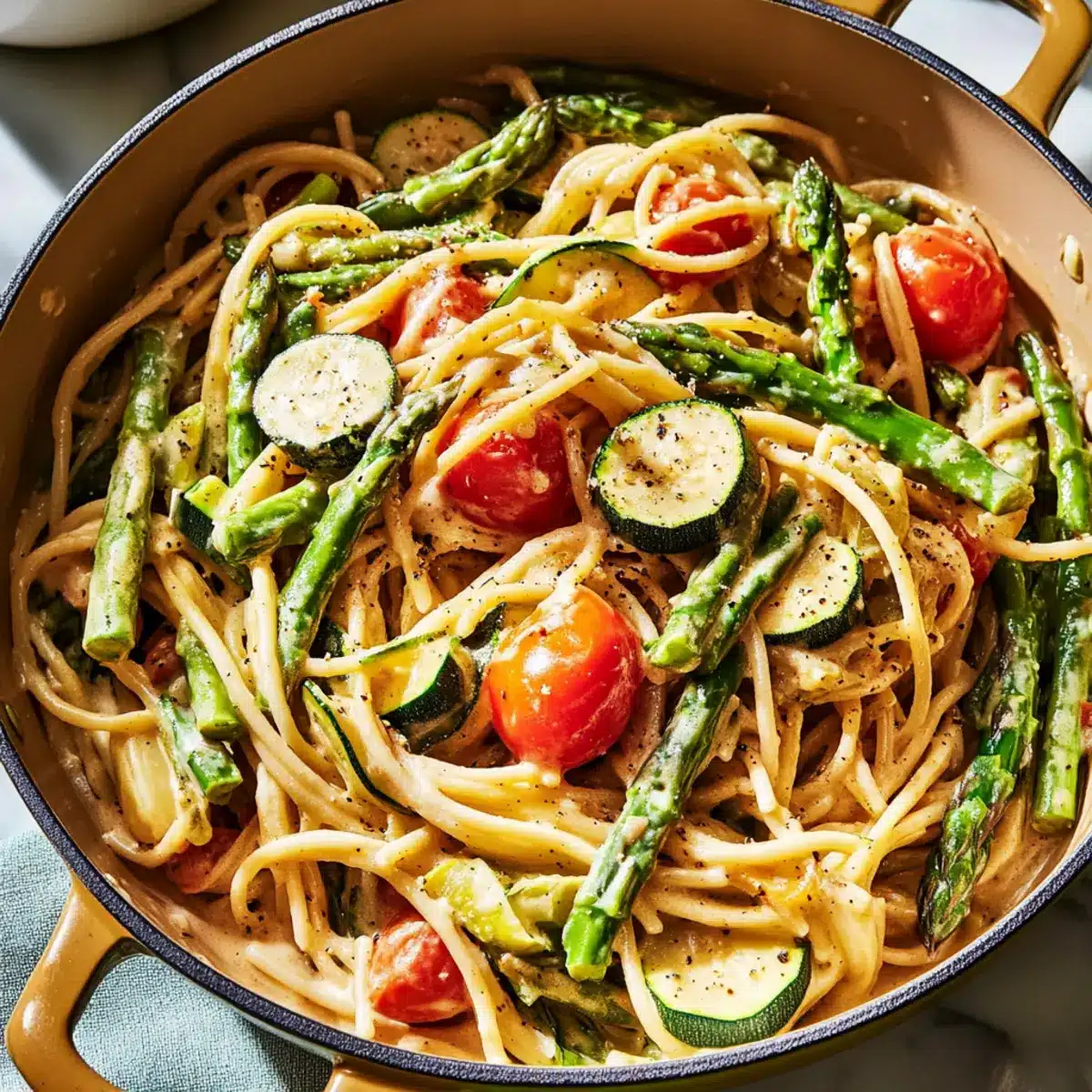
Pasta Primavera Recipe FAQs
What vegetables are best for Pasta Primavera?
Absolutely! The beauty of Pasta Primavera lies in its flexibility. Fresh, seasonal vegetables like zucchini, asparagus, red bell peppers, and grape tomatoes shine in this dish. You can also use broccoli, spinach, or even snap peas for a twist. Choose vibrant and firm vegetables for the best flavor and texture.
How long can I store leftover Pasta Primavera in the fridge?
You can store leftovers in an airtight container in the fridge for up to 3 days. When reheating, be sure to add a splash of cream or a little pasta water to restore its creamy consistency and prevent it from drying out. Enjoy those delicious flavors all over again!
Can I freeze Pasta Primavera?
Very! To freeze, portion the cooled Pasta Primavera into freezer-safe containers. It can be stored in the freezer for up to 2 months. When you’re ready to enjoy it again, thaw it in the fridge overnight. Reheat on the stovetop over low heat, adding extra cream or reserved pasta water as needed to achieve that luscious, saucy texture.
What if my vegetables turn mushy when cooking?
A common issue, but fret not! To avoid mushy vegetables, sauté them separately and for just the right amount of time. Zucchini takes about 3-4 minutes, whereas asparagus typically needs only 2-3 minutes. Be vigilant and check for doneness; they should retain a lovely crunch and vibrant color.
Is Pasta Primavera suitable for my vegetarian diet?
Absolutely! This Pasta Primavera is a wonderful vegetarian option, brimming with colorful veggies and a creamy sauce. If you’re looking for a vegan alternative, simply substitute heavy cream with a plant-based option like coconut cream, and swap Parmesan for nutritional yeast. It’s versatile enough to cater to different dietary needs!
What kind of pasta should I use for Pasta Primavera?
I recommend using spaghetti, as its long strands beautifully capture the creamy sauce and vegetables. However, any long pasta works well—fettuccine, linguine, or even gluten-free pasta are excellent choices if you prefer. The more the merrier in this delightful dish!
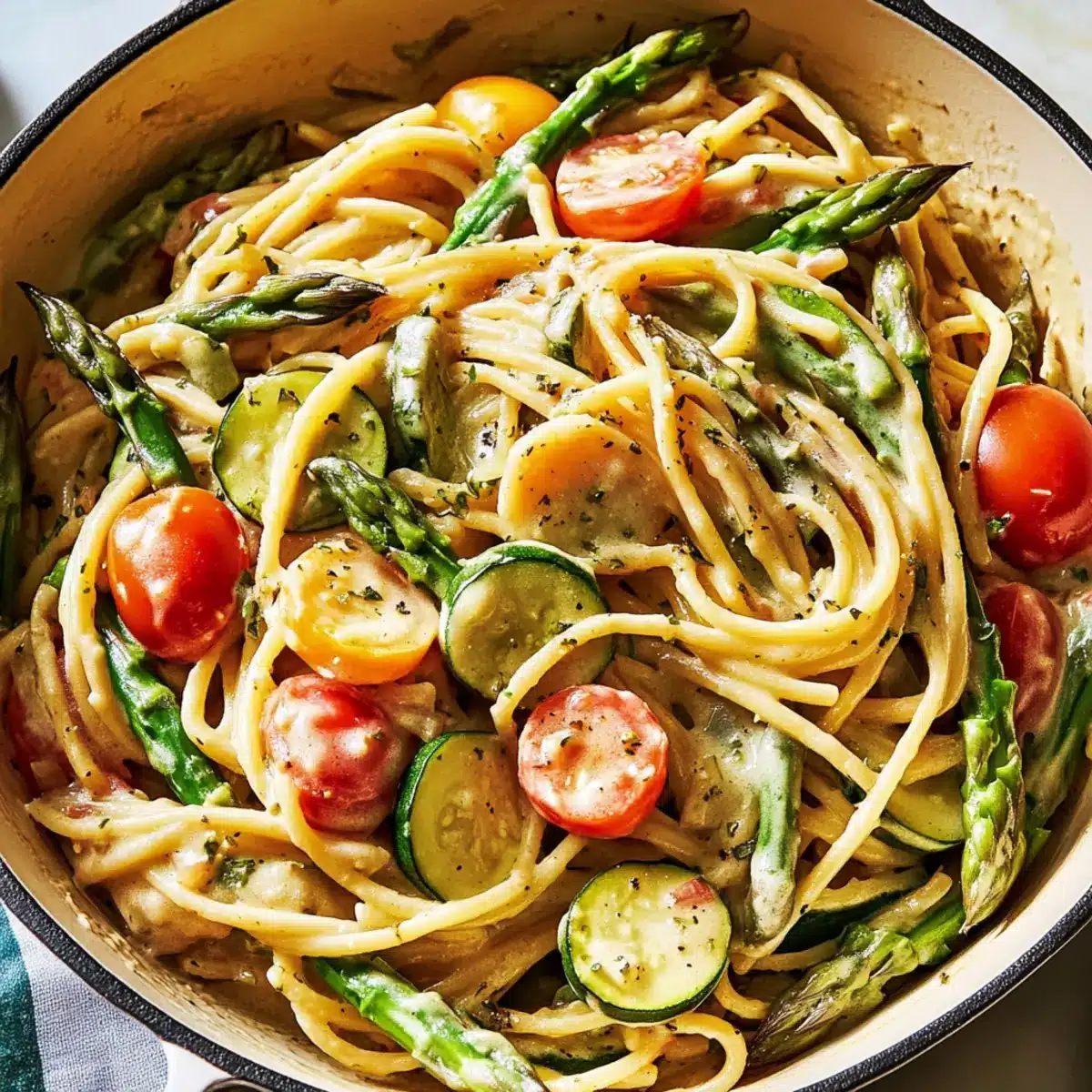
Creamy Pasta Primavera Bursting with Fresh Spring Flavors
Ingredients
Equipment
Method
- Begin by bringing a large pot of water to a rolling boil and season it generously with kosher salt. Add the spaghetti and cook until it is just one minute shy of al dente, approximately 7-9 minutes. Before draining, reserve about 1 cup of pasta water. Drain the spaghetti and set it aside, ensuring you finish this step while the pasta is still warm.
- In a large skillet, heat 2 tablespoons of extra-virgin olive oil over medium heat. Once the oil shimmers, add the zucchini slices and sauté for about 3-4 minutes until they are tender and starting to brown. Next, add the asparagus and cook for an additional 2-3 minutes until it turns bright green and remains slightly crisp. Remove both vegetables from the skillet and set aside.
- In the same skillet, add another tablespoon of olive oil if needed and lower the heat to medium-low. Toss in the diced red onion, leeks, and finely chopped garlic. Stir occasionally, seasoning with a pinch of salt, and cook until the onions are translucent, about 4-5 minutes.
- Add the halved grape tomatoes, heavy cream, thawed peas, and a splash of the reserved pasta water to the skillet. Stir vigorously for about 2 minutes until everything is well combined and the sauce thickens slightly. Bring back the sautéed zucchini and asparagus, folding them into the creamy mixture until evenly coated.
- Sprinkle finely grated Parmesan cheese over the hot pasta mixture and toss to combine, allowing the cheese to melt into the sauce beautifully. Adjust the seasoning with freshly ground black pepper, lemon juice, and lemon zest to taste.
Leave a Reply